Managed Kubernetes
Containers - next level
Kubernetes is the standard for orchestrating multiple containers and groups the instances that make up your application into logical units. Kubernetes gives you flexibility and portability for your applications. It is the tool for deploying, scaling and maintaining these container landscapes.
You scale your containers as needed at any time — simply via the API or the web interface, while we take care of smooth operation and fault resolution.
Three examples, not packages: the configuration follows from your applications, billing is via the cloud servers used
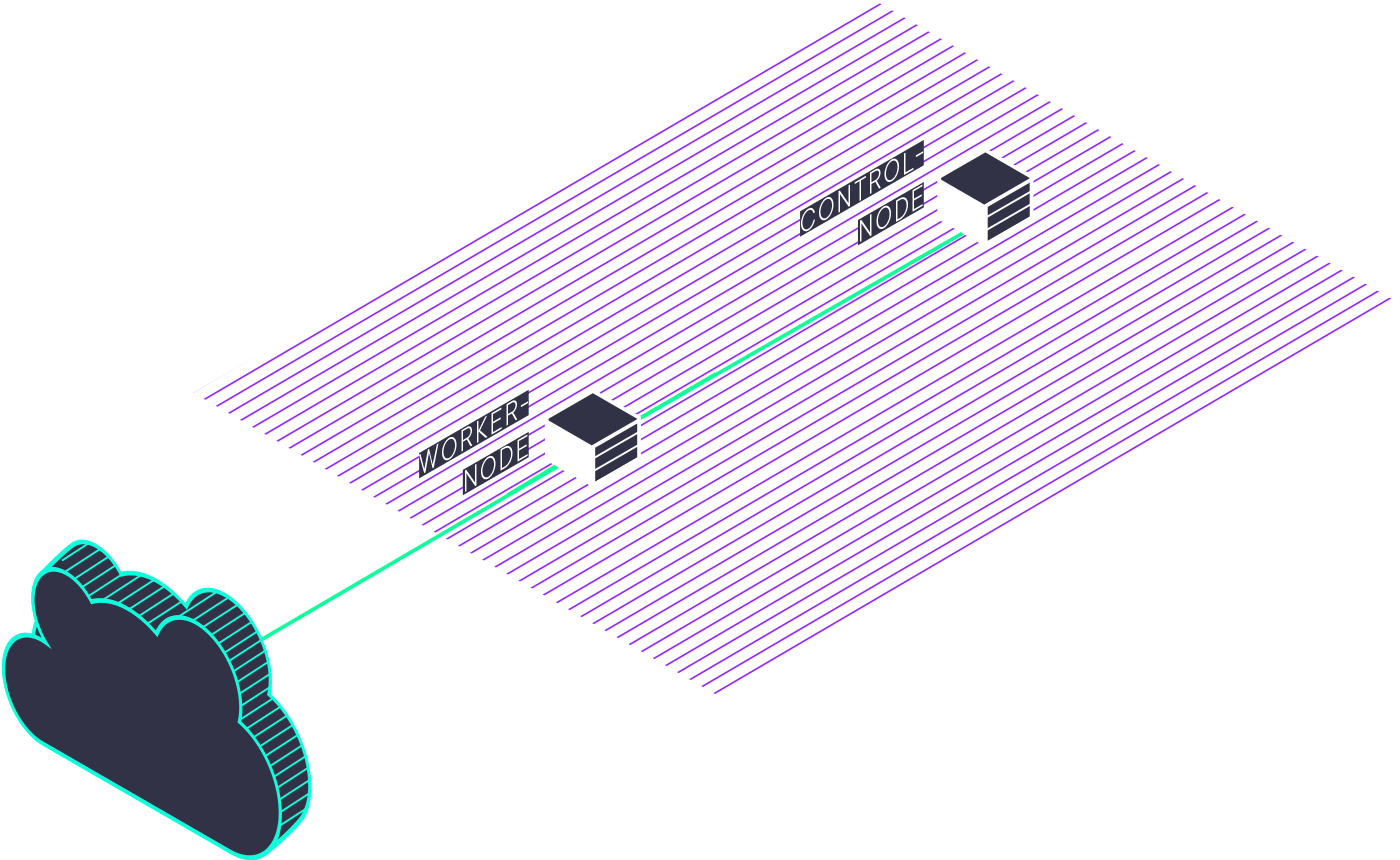
You can start with our Managed Kubernetes product through a simple, low-cost environment for test and development purposes. Speed up your development processes by starting with only the resources you need. Scale flexibly as required, without having to deal with the complexity of administration.
Example resources
- Control node with 2 vCPU and 8 GB
- Worker node with 2 vCPU and 8 GB
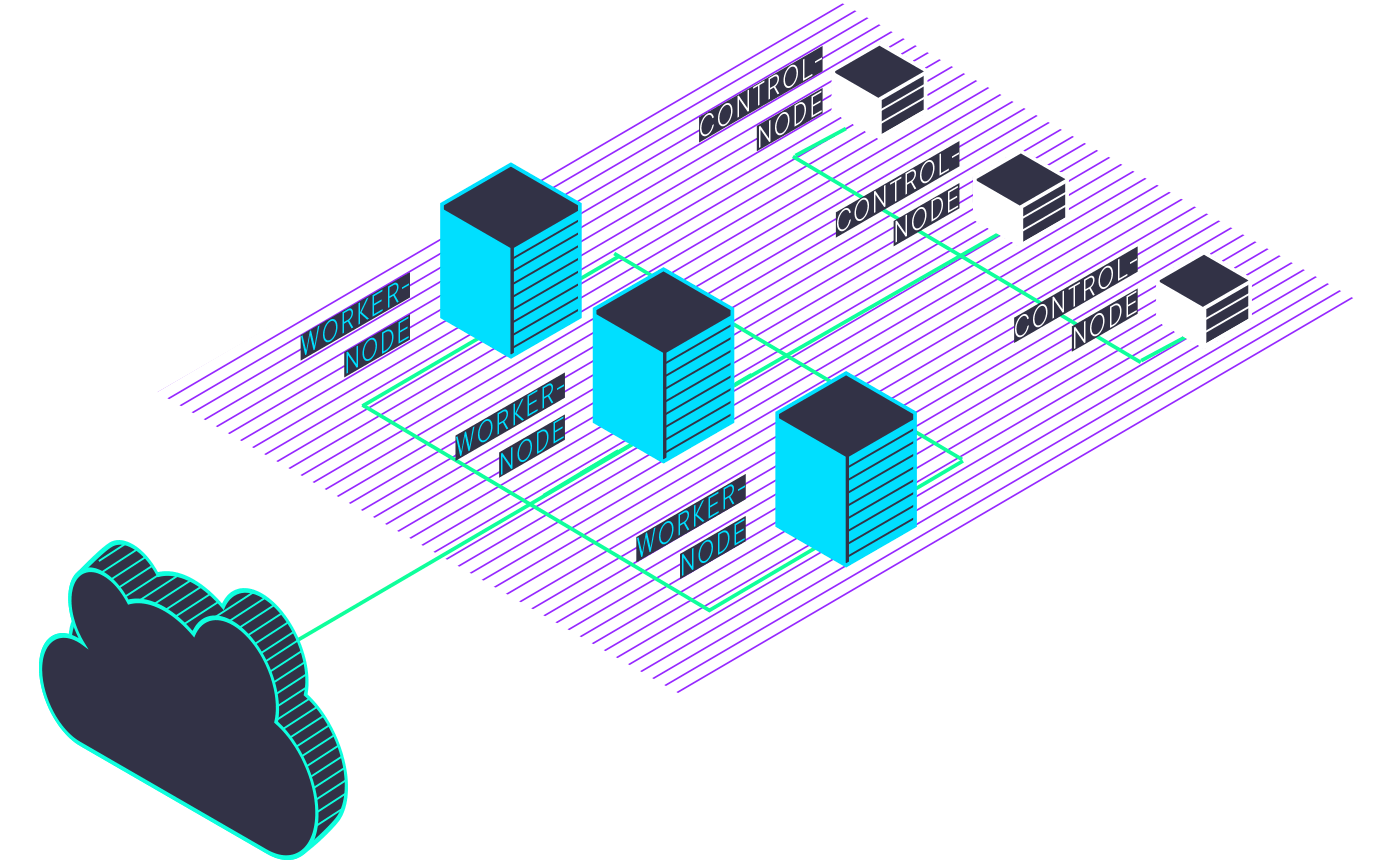
For running your most important applications in production, it is essential that both control and worker nodes are redundant and highly available. Infrastructure like this is a reliable basis for your company's growth and keeps your applications continuously available. It can also be scaled flexibly at any time to meet your changing requirements.
Example resources
- 3 x control node with 2 vCPU and 8 GB
- 3 x worker node with 8 vCPU and 32 GB
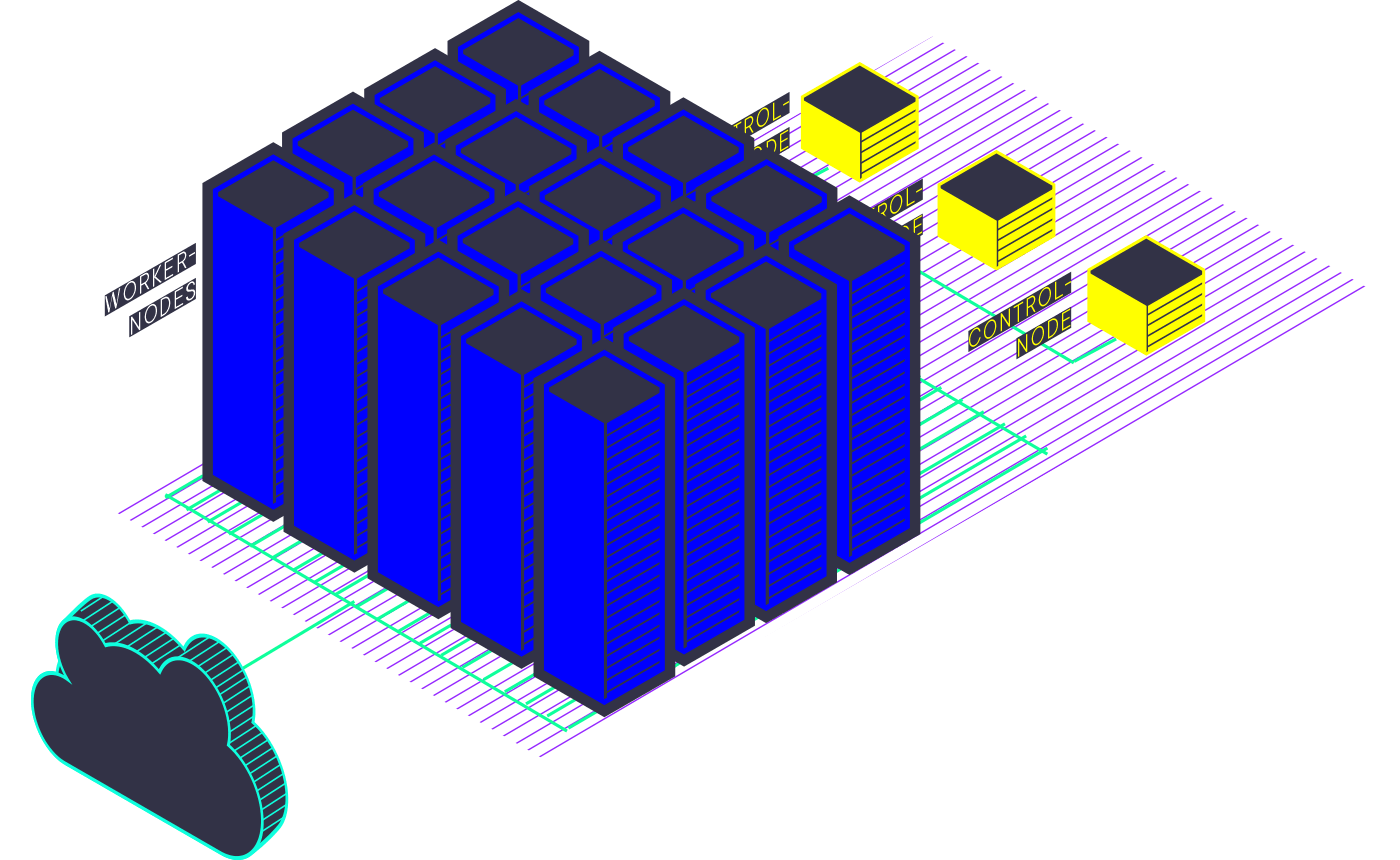
Use the scale-out function of our platform to extend your production environment by hundreds of nodes. This lets you handle even large load scenarios flexibly and give your development teams a capable system. Scale your infrastructure to match your requirements and get more out of your applications.
Example resources
- 3 x control node with 4 vCPU and 16 GB
- 5-20 x worker node with 16 vCPU and 64 GB
Scales by itself
The number of nodes grows and shrinks along the thresholds you set. That keeps utilisation within a sensible range without anyone having to step in at night.
Management
Web interface, kubectl and Helm, plus the APIs for your own workflows — you work the way you know from Kubernetes. We keep the cluster underneath in order.
Combinable
The cluster can be connected to the other cloud functions — load balancing in front, storage behind, all from the same data centres.
Price catalogue, as of 14 January 2026
The control plane priced
The cluster consists of two parts: the control plane that holds it together, and the worker nodes on which your applications run. The control plane has a fixed price; the nodes are charged at the cloud server prices — as many as your load needs.
Control plane per cluster
- Managed Kubernetes Control — S For test and development environments
- €179.00 / month
- Managed Kubernetes Control — M For production use
- €289.00 / month
- Managed Kubernetes Control — L For large environments and many nodes
- €399.00 / month
- Setup Per cluster node, one-off
- €99.00 one-off
All prices net plus VAT, as per the price catalogue of 14 January 2026. The worker nodes are added by usage from the [Secure Public Cloud](/en/cloud/secure-public-cloud-openstack).
Frequently asked questions about Managed Kubernetes
What does kyberio take on, and what stays with me?
We set up the cluster, apply updates, monitor operation and resolve faults. Your applications, their configuration and their data stay with you. You control them via the web interface, kubectl, Helm, the API or Terraform.
What does Managed Kubernetes cost?
It is made up of two items. The control plane is priced in three sizes — €179.00, €289.00 or €399.00 net per month, plus €99.00 one-off per cluster node; the prices are listed above. The worker nodes are added according to the number and specification of the cloud servers used, and there are no fixed packages for them. The three scenarios on this page are examples that give an idea of scale, not bookable configurations: a cluster is built exactly the way your applications need it. A test and development environment starts with one control node and one worker node, each with 2 vCPU and 8 GB; a production environment uses three control nodes and three worker nodes. We will give you the price for your configuration in a conversation.
What do the clusters run on?
On the Secure Public Cloud, our OpenStack platform. So you are not booking third-party infrastructure on top — computing power, storage and network come from the same company as the cluster running on them.
Does Managed Kubernetes run in Germany?
Yes. The clusters run in our data centres in Hanover and Wolfsburg; a site in Frankfurt is planned. Both are certified to ISO 27001 based on BSI IT-Grundschutz (BSI-IGZ-0552-2023). kyberio is subject to German law and not to the CLOUD Act.
What is the difference between Managed Kubernetes and Managed OpenShift?
Managed Kubernetes is the open base platform that you shape yourself. Managed OpenShift builds on it and already includes a container registry, monitoring, log aggregation and CI/CD tools, together with stricter defaults for permissions and security.
How far can the cluster scale?
The nodes scale automatically based on thresholds you set. For large load scenarios, the production environment can be extended through scale-out.
Have questions?
We look forward to hearing from you.
- We will get back to you as soon as we can.
- No obligation, free of charge.
Sovereignty
Paving the way for digital sovereignty

-
Owner-managed since 1997
As an owner-managed operator with our own data centers, we make our decisions independently and are subject exclusively to German / EU law.
-
100% made in Germany
Our data center, product development, and customer support are all based in Germany for your digital sovereignty.
-
24/7 Customer Support
We are here for you: 24/7/365 customer support, in English and German